Thursday, December 30, 2010
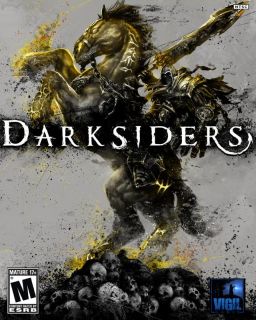
Review: Darksiders
Game: Darksiders (2010)
Genre: Action/Adventure, Hack-n-Slash
Developer(s): Vigil Games
Publisher(s): THQ
Platform(s): PS3, Xbox 360, PC
-------------------------------------------------------------------------------------------------------
Rating: 8 out of 10
Pros: Stunning graphics/animations, varied arsenal, compelling story
Cons: Unoriginal gadgets/puzzles, lack of interesting combat combos
-------------------------------------------------------------------------------------------------------
Darksiders begins in conflict, as angels and demons war against one another on Earth. The player takes on the role of War, one of the Four Horsemen of the Apocalypse, sent to pass judgement on angels, demons, and humans alike. War quickly discovers, however, that this Apocalypse isn't all peaches and cream as he is the only Horseman sent to Earth to hack things apart. This act violates the terms of the Apocalypse (even though the angels and demons started it!), so War is banished to face the judgement of the Charred Council. Once he is stripped of his powers, War is given a second chance to fix HIS mistake, and then sent back to Earth.
While Darksiders was entertaining to play and had an interesting, original story, its gameplay didn't seem as original. The combat system is very similar to God of War's: button smashing enemies to death, hitting (circle) to perform a finishing move. However, the combo system isn't as involved as God of War's, with [square] and /triangle\ being the only attack buttons and no way to intermingle them. You use souls to purchase upgrades and items (similar to GoW), restore health, and to restore Wrath (mana). The gadgets and puzzles that you solve are very similar to those found in the Zelda games: a hook-shot-like device, a bladed boomerang, using bombs to blow up crystal formations, collecting parts of an item to increase your health (heart containers), pushing heavy objects, etc. Lastly, there is a gadget called the Warpgate device, which shoots blue and red portals to solve puzzles... like in Portal.
While I do deduct points for lack of originality, Darksiders is still a fun game because it consolidates the fun elements of those other games into one game; those elements worked for those games, so they work for Darksiders. What I have come to learn about game design is that all games build off previous games in some way, either mirroring or expanding on proven design techniques.
An element unique to Darksiders that I enjoyed was the weapon-rune system. You could collect runes that, when attached to a weapon, grant War additional benefits. For example, there are runes that grant additional weapon damage, increase the amount of souls collected from each slain enemy, increase your armor, or allow you to gain rage more quickly (allowing War to hulk out into a demon-like creature). Each rune also alters the look of War's sword, which adds a nice aesthetic touch. While these runes added a little customization and flavor to the game, I wish the system was a tad more developed. It didn't seem like the bonuses granted by each rune was very significant or noticeable. You essentially had to assume that they were making a difference.
All in all, the game was fun and entertaining to play. The story and graphics were stunning, leaving me eager for the sequel (spoiler alert!). However, the game lacks replay-ability: There is only one path you can take through the story, weapon runes are interchangeable, and there is no multiplayer functionality. I full-heartedly suggest playing this game, which is possible to beat in about 10-15 gameplay hours, or over a renting period.
Thursday, December 16, 2010
Review: Spider-Man: Shattered Dimensions
Game: Spider-Man: Shattered Dimensions (2010)
Genre: Action/Adventure, Platformer, Stealth?
Developer(s): Beenox
Publisher(s): Activision
Platform(s): PS3, Xbox 360, PC, Wii
-------------------------------------------------------------------------------------------------------
Rating: 7 out of 10
Pros: Spider-Man, clever quips, varied gameplay mechanics, comic-book like
Cons: Lots of bugs (and I'm not talking about the obvious arachnids)
-------------------------------------------------------------------------------------------------------
Spider-Man is by far my favorite super-hero, and I usually enjoy Spider-Man games, but I have mixed feelings when it comes to Spider-Man: Shattered Dimensions. I thought the game was entertaining and fun, but it had clunky controls, rigid camera angles, and was crawling with bugs.
Spider-Man: Shattered Dimensions features four distinct Spider-Man universes: Amazing (red suit), Ultimate (black, symbiote suit), Noir (sepia-toned suit), and 2099 (blue, futuristic suit). Each universe/dimension features slightly unique combat styles, but the control system and combos are essentially the same for each Spider-Man, making switching between each version seamless.
Amazing Spider-Man features a combination of melee attacks and cartoony mid-ranged web attacks (creating large fists or weapons out of web during combo attacks). Amazing Spider-Man has no real unique combat style or mechanic of his own, but forms the basis for all other Spider-Man combos and tactics.
Ultimate Spider-Man uses the symbiote's tendrils and symbiote-goo instead of webbing. The core combat mechanic of Ultimate Spider-Man is Symbiotic Rage. The rage meter fills by attacking enemies or by being attacked. Once the meter fills, Spider-Man can become enraged, causing his combo attacks to cause greater damage and hit multiple enemies. Hitting enemies while enraged helps to sustain your rage, which I thought was a cool feature.
Spider-Man 2099 utilized a technologically advanced spider-suit for enhanced agility and powerful melee combo attacks. Spider-Man 2099's unique ability was his suit's Accelerated Vision, which heightens his reflex to the point where enemies seem slower, making it easier for Spider-Man to dodge incoming attacks or maneuver through combat. Even though this combat mechanic didn't have as much of an impact on Spider-Man's fighting ability as Symbiotic Rage, it was a nice little ability to have when dealing with boss fights or when swarmed by enemies.
Completely unique from the other universes, the Noir dimension revolved around a stealth system. Enemies were much tougher (blocked more of Spider-Man's attacks) and had guns that did some serious damage if detected. Noir Spider-Man also lacked the sweeping area attacks and combos of the other Spider-Men, focusing more on one-to-one combat combos should he be discovered. The best way to handle enemies in the Noir dimension was to use a web-pull, yanking enemies into the darkness and then feeding them a knuckle-sandwich or restraining them in webbing.
While this system was completely unique from the others, it could have been more refined. Being concealed in the shadows wasn't apparent enough half the time; the screen would change from sepia tone to black and white if you were in the shadows, but the color change wasn't drastic enough and there wasn't any other indicators (like a spider symbol that changed color or something). Noir Spider-Man's health also regenerated at a much quicker rate, making detection from enemies too forgiving (the consequences for being detected weren't severe enough. You could just run and hide for a couple of seconds, and then be at full health, diminishing the stealth system experience).
Lastly, there weren't any specific upgrades for Noir Spider-Man like there were for 2099's Accelerated Vision or Ultimate's Symbiotic Rage, which I felt could have given the Noir dimension more flavor.
Spider-Man: Shattered Dimensions also featured an upgrade system in which you could spend spider-essence to purchase new combo attacks, upgrade Spider-Man's health and health regeneration, enhance the Rage and Accelerated Vision abilities, or purchase alternate costumes for each Spider-Man. New upgrades would unlock after completing a certain number of challenges; for example: defeat x number of enemies, perform ability x, y number of times, etc. This made replaying certain levels more viable, giving you something new to strive for each time you did.
One element of the game that I really enjoyed was throughout gameplay, the camera would change to first-person view during some cut-scenes, immersing you in the experience of actually being Spider-Man. This also happened during certain boss fights, allowing you to get up close and personal to those villains as you grapple and exchange blows.
The only detriments to my gameplay experience were the numerous glitches and bugs I encountered, forcing me to either restart the level or fall back to a previous savepoint. It wasn't like I was looking for bugs; these glitches appeared throughout routine gameplay (reoccurring each time I restarted the level until I played it out differently). I am baffled at how a game can ship with so many obvious bugs; with any bugs at all, really, excluding those extremely rare glitches (that's what they have QA testers for, no?).
In terms of game design, I would have liked to have seen the game's mechanics better refined. Perhaps tweak the combos a bit and offer some damage upgrades (I noticed that even though you got new combos, it still took roughly the same number of hits to bring the same enemy down). The Noir stealth system could also use more depth, such as upgrades that make Spider-Man harder to detect, or if detected, return to stealth quicker, adding modifiers for walking/sneaking vs. running and jumping, or giving enemies an enhanced detection system, etc. Another interesting idea would be to design the game around sandbox levels (similar to Spider-Man: Web of Shadows), to include some secondary missions to change up gameplay, and to allow players to switch between dimensions as you play (offering unique missions/enemies/etc) instead of playing each dimension separately.
Despite the bugs/glitches, Spider-Man: Shattered Dimensions was fun and entertaining to play. I would definitely recommend playing this game, which is totally possible over a renting period (the game plays out like any other action/adventure game, averaging about 10-15 hours of gameplay).
Tuesday, November 23, 2010
Review: Front Mission Evolved
Game: Front Mission Evolved (2010)
Genre: Third Person Shooter (TPS), Action
Developer(s): Double Helix Games
Publisher(s): Square Enix
Platform(s): PS3, Xbox 360, PC
-------------------------------------------------------------------------------------------------------
Rating: 6 out of 10
Pros: Varied customization, good graphical animations, minor Front Mission "feel"
Cons: Short single-player experience, gameplay differs from original Front Mission genre
-------------------------------------------------------------------------------------------------------
Front Mission Evolved takes place in the year 2171, 50 years after the events of Front Mission 5 (which was only released in Japan, so this pretty much means... squat). The world's super-powers have started a massive push into outer space through orbital elevators to set up surveillance satellites, allowing them to keep watch over their adversaries. However, a North American elevator is attacked by unknown forces, creating a torrent of destruction, conspiracy, and armed conflict. The player takes the role of Dylan Ramsey, a young wanzer (this series' term for 'mech' or mechanized armor) engineer that finds himself caught within the coming storm of war.
As a stand-alone game, Front Mission Evolved was entertaining to play, but needed some serious polishing. The controls were clunky and rigid, making it difficult to maneuver or aim. I would get caught on corners constantly, which wasn't aided by the fact that the levels were too compact and the camera angle was ill-positioned. The graphics were decent, offering detailed scenery, nice explosions, and realistic animations, but could have been much more brilliant and breathtaking given the capabilities of the PS3's hardware. The voice acting was stiff and repetitive, but the game's music score wasn't too shabby. The presentation was slightly lacking, consisting of blue boxes packed with information and inconsistent voice acting (speaking one box and screaming the next). Lastly, the story-telling was rather weak, leaving things rather vague and non-immersive.
One feature that I really liked was the depth of customization the game offered. You could customize each body part of your wanzer, each weapon and the combat skills used with that weapon, the wanzer's combat role (melee striker, sniper, assault, mobility, artillery, etc.), and the color scheme and logos of each part. This customization is what really gave the game its Front Mission "feel". However, there were times where certain missions forced you into certain builds for no real apparent reason. Some missions made me use hover-legs or spider-legs, greatly reducing my mobility and ability to avoid damage, when I could have just as easily used normal legs to complete the mission.
Another interesting feature they added in Front Mission Evolved was the 'non-wanzer' missions, where you would play out the mission as Dylan Ramsey on foot, armed with a few grenades, a rocket launcher, and an assault rifle. However this feature was still sub-par compared to other third-person shooters. There was no cover system other than crouching, your health regenerated over time, the only collectible items other than ammo were briefcases of money for upgrading your wanzer, and the enemies (including enemy wanzers) were easily killed with a couple of shots.
Front Mission Evolved's multiplayer section was slightly more developed. Wanzer mobility was slightly less of an issue, and combat was a little more engaging than just having npcs standing there to be shot at. However, multiplayer mode felt very "grindy" and long; 70 levels to achieve in experience and game matches that would last for 15-20+ minutes at a time. Also, after a couple of game matches, the game would just kick you back to the main menu after a few seconds of freezing, instead of showing the scoreboard.
For being a fan of the Front Mission series and its original real-time strategy (RTS) RPG gameplay, Front Mission Evolved was a major disappointment. The previous games in the series were extraordinary in both gameplay and story-telling, which is what I was expecting of Front Mission Evolved.
As a designer, I would have kept the game in its original RTS RPG roots and better developed the game's story, but kept Front Mission Evolved's new on-foot TPS game feature for a few select missions, giving the game an "evolved" mix of gameplay experiences. Multiplayer would also be a mix of both the RTS and TPS elements, allowing players to choose what element they preferred most, as well as offering variety. You do have to respect the game's designers for trying to take the series in a new direction, but that great of a step could have been handled with more care and development.
It is totally possible to beat this game in 3-4 days, including replaying some missions or playing a few multiplayer matches. But if you really want to play a Front Mission game, play the original four. Evolved wasn't horrible as a stand-alone game (aside from the polishing), but in relation to the Front Mission series, it fails in comparison.
Tuesday, November 9, 2010
Review: God of War III
Game: God of War III (2010)
Genre: Action/Adventure, Hack-and-Slash
Developer(s): Santa Monica Studio
Publisher(s): Sony Computer Entertainment
Platform(s): PS3
-------------------------------------------------------------------------------------------------------
Rating: 7.5 out of 10
Pros: Great series, awesome graphics, steeped in greek mythology, intuitive button mashing, large selection of weapons and attack combos
Cons: Short story-mode gameplay, numerous plot events jammed into short story
-------------------------------------------------------------------------------------------------------
God of War 3 picks up after the events of GoW 2, as Kratos climbs on the back of the titans to overtake Mount Olympus and destroy his father, Zeus, and essentially wraps up the GoW trilogy. As with the last GoW game, you are thrown straight into the action, fully upgraded with most of the powers and combos from the last game. After a few series of events, Kratos is cast once again into Hades and into the River Styx, where he is stripped of his powers.
To upgrade your weapons and to obtain new attack combos, you have to collect red orbs. These orbs are obtained through slaughtering everything that comes before you, or by opening red chests (ooo a box!). Then from the menu, you can allocate any number of red orbs you have obtained into a desired weapon. After reaching a certain number, the weapon levels up, increasing its damage and unlocking new combo attacks for that weapon.
To upgrade your health, magic, or item-usage, you had to find hidden chests (ooo a box!) that contained gorgon eyes, phoenix feathers, or minotaur horns, respectively. Also, after killing certain bosses, you could collect unique items that give you special abilities once you beat the game. I assume that these were put in place to encourage you to replay the game, but this time with extra damage or fully upgraded, etc. However, enabling these "cheat code" items disabled trophies, so that kind of sucked if you still had trophies to collect.
I really liked this upgrade system throughout the GoW series, as it let you upgrade the weapons you liked most, giving the player a little customization of their gameplay experience. By the end, however, you should have enough red orbs (and even some left over) to max out all your weapons.
The kills and combos in GoW 3 were just as brutal and gory as the first two games. There was still a lot of button mashing throughout the game, so they kept with the original GoW feel. One of the new mechanics introduced in GoW 3 was the Rage meter. As you killed enemies or opened white chests (ooo a box!), you would collect white orbs that filled the Rage meter. Once the Rage meter was full, you could bust out your massive Sword of Olympus and start whaling on enemies without taking damage.
Now, the story is what disappointed me the most. Like the first two games, GoW 3 packed several plot events into a very short time span. It took me only about 10-11 hours of gameplay to complete the game, but so much happened in that short amount of time that there were some minor plot holes and loose ends. As you know from my previous blogs, I try not to give the story away, so I won't, but to say the least I was disappointed how it played out. Unlike the first two games, I as a player didn't care as much how the story unfolded. I was too caught up in fast-paced action and flashy graphics to stop and take notice of how the game's plot progressed.
Design-wise, the mechanics were well-developed and polished. There were no bugs or glitches from my experience. Finally, the game had awesome graphics and audio that really immersed me as a player and effectively delivered a brutal, fast-paced action gameplay experience. However, I would have liked to see longer gameplay, perhaps by spacing the levels and plot events out further, and maybe adding more puzzles or obstacles. In the developer's defense, this task can be very difficult when you have three games that essentially follow the same plot, lore, and setting. In that respect, they did a pretty good job, but the game still seemed rushed.
If you love the God of War series, I suggest you buy this game to complete your collection. Otherwise, it is completely possible to beat this game within a day or two, including all of the extra challenges. Other than replaying the game on a different difficulty with special "cheat code" items or costumes, the game has no real replay-ability factor or multiplayer functionality.
Saturday, October 23, 2010
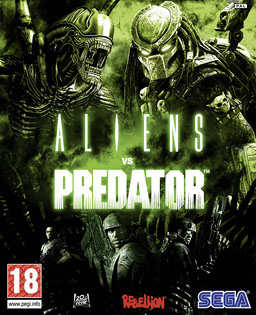
Review: Aliens vs. Predator
Game: Aliens vs. Predator (2010)
Genre: First-Person Shooter, Action, Survival Horror
Developer(s): Rebellion Studios
Publisher(s): Sega
Platform(s): PS3, Xbox 360, PC (Windows)
-------------------------------------------------------------------------------------------------------
Rating: 7 out of 10
Pros: Suspenseful, challenging, graphic, gore, multiplayer.
Cons: Short story-mode gameplay.
-------------------------------------------------------------------------------------------------------
AvP features three playable stories/factions; the Marines, Aliens, and Predator. While each faction is unique in terms of individual plot and gameplay mechanics, the three stories still revolve around one overarching storyline. The humans have uncovered an ancient Predator temple on a remote planet. While attempting to gain access to the temple, the humans trigger a beacon that calls the Predators to the planet to eliminate the human threat.
As a Predator, you use stealth and cunning to stalk human prey and your brute strength and technology to overcome any aliens or "serpents" you encounter. The Predator's special kill allows you to harvest trophies from your prey, be it human skulls or alien 'springy-mouth' things.
As an Alien, you use stealth tactics, speed, and wall-crawling to either harvest human prey for implantation, or to consume their brains like a slurpee. You can also destroy light sources to create darkness, thus allowing you to hide and move around undetected.
Finally, the Marine had access to a varied arsenal of weaponry (but no grenades???), which included a pistol, shotgun, pulse rifle, flamethrower, scoped rifle, and the smartgun (gleefully-evil chuckle). As opposed to the other factions, the Marine's only real tactic is to survive.
The Marine missions are where AvP shines as a survival horror game, keeping you constantly on the edge of your seat as you traverse through the darkness of this alien world, accompanied only by the sound of your own footsteps and the pulsing pings of your bio-scanner. To illuminate the darkness, the Marine was given timed flares and a shoulder-mounted flashlight, but the amount of reassurance these tools provide is comparable to a stuffed teddy bear when facing off against a swarm of aliens. I will honestly admit that my heart skipped a beat every time my bio-scanner picked up movement while tip-toeing through a dark, silent corridor, just to have the scanner go dormant a moment later. This really reflects the tone set in the movies perfectly, which warrants a pat on the back for the developers
Multiplayer mode, on the other hand, is intense in a different way. Your AI enemies are replaced by human beings, which offers a completely new challenge. In addition to using your faction's tactics, you must also outwit your fellow players, which involves much greater skill than single-player mode.
Multiplayer also offers a variety of game types (relative to the subject matter) that keep matches interesting. One of these game types includes "Infestation," where all players start off as a marine, and then one player is randomly selected as the alien. It is the alien's job to kill the other marines, at which time they too become aliens. To win the match you must be the last marine standing. There is a similar game mode where a lone predator player hunts a group of human players. Lastly, there is Survival mode, where all players, as marines, co-op to defend against a swarm of aliens. The only downside to the multiplayer mode is that gaining experience points (XP) only gets you new character skins, not new abilities, weapons, or maps, which would have been an excellent addition to gameplay.
From a designer's point of view, I would have given the Marine's flashlight a limited lifespan, periodically casting the player into darkness while their flashlight recharges, forcing them to pop a flare and silently pray that the scanner doesn't pick up movement. This would greatly add to the game's suspense and provide more of a thrill and challenge. I would also have liked to have seen the Predator's cloaking field drain energy, forcing the player to have to choose when to use to it and when to conserve energy for your plasma-caster. A longer, more involved story for each faction in single-player, and a more expansive/rewarding XP system in multiplayer would have made this a much better game. Aside from that, the game was free of bugs from what I experienced and had only a couple minor clipping issues while playing as the Alien. The graphics could have been polished up a bit, and a deeper color pallet could have been used; something that utilizes the full capabilities of the PS3's hardware. The sound quality was phenomenal, offering all the sounds you would have expected from the movies.
If you are a fan of the Aliens and/or Predator universe, I would recommend buying this game. Although story-mode is short, the game's multiplayer mode does give it some replay-ability. Otherwise, you should easily be able to beat the game's single-player mode during a rental period, with time to spare to try out multiplayer mode.
Thursday, October 7, 2010
Review: Prince of Persia: The Forgotten Sands
Game: Prince of Persia: The Forgotten Sands (2010)
Genre: Action/Adventure, Platformer
Developer(s): Ubisoft Montreal, Quebec, Singapore, Casablanca
Publisher(s): Ubisoft
Platform(s): PS3, Xbox 360, PC (Windows)
-------------------------------------------------------------------------------------------------------
Rating: 7 out of 10
Pros: Classic PoP feel, combat upgrade system, spectacular graphics and story-telling.
Cons: Strict upgrade system, short gameplay, frustrating acrobatic mechanics.
-------------------------------------------------------------------------------------------------------
PoP: The Forgotten Sands revisits the original Prince of Persia: Sands of Time storyline, taking place in the seven year gap between PoP: Sands of Time and PoP: Warrior Within. You play as the Prince, on a mission to meet with your brother, Malik, to learn about leadership. The game begins as the Prince arrives at Malik's kingdom to find it under siege by enemy forces. You quickly learn that Malik's forces are being overrun and defeat is imminent. However, Malik has a plan to awaken the legendary army of Soloman in an attempt to turn the tides of war. While weary of his brother's plan, the Prince agrees to aid him. Once the army is released, the kingdom's last glimmer of hope quickly becomes its demise as Soloman's Army is not a gift, but a curse, releasing an ever-growing army of undead soldiers. As the Prince, it is your duty to stop Soloman's Army and save not only your brother's kingdom, but the known world itself from the ravages of the demonic army.
For the most part, this game played out rather quickly. Moments after the opening cinematic, you are cast straight into the action, gaining brief breaks whenever you gain an upgrade point or during cut-scenes. From there, gameplay steadily escalates in difficulty and excitement. Which means, in classic PoP fashion, constant acrobatic mishaps and time-reversing. Now, I never played PoP: Warrior Within, so I am not sure how time manipulation was handled in that game, but in Forgotten Sands, you didn't have the Dagger of Time, you instead were granted time manipulation through Djin magic.
The upgrade system was a nice touch to the gameplay, but was too linear to allow for customization or variation (being able to gain all the upgrades by the end of the game). While it did allow you to gain more energy to reverse time more often or increase the length of time you could use some of your abilities, it mostly had a direct effect on combat, which wasn't quite as abundant or difficult as the game's acrobatic challenges. And I am not quite sure if this is a bug or not, but often when I died, my XP would jump just below the next upgrade point, meaning the more I died, the faster I upgraded.Otherwise, the game was bug free from what I experienced.
In regards to game length, it maybe took 15-20 hours to complete this game, something you could easily do over a weekend. For that reason, and due to the lack of replay-value (no variation in upgrades or story progression), and the absence of multiplayer functionality, I would probably recommend renting this game instead of buying it (unless, of course, you are a diehard PoP fan). The game was fun and entertaining, but not something I could play over and over again.
Monday, September 27, 2010
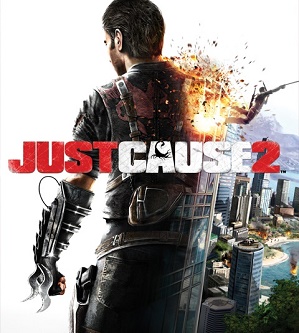
Review: Just Cause 2
Game: Just Cause 2 (2010)
Genre: Action (Sandbox)
Developer(s): Avalanche Studios, Eidos Interactive
Publisher(s): Square Enix
Platform(s): PS3, Xbox 360, PC (Windows)
-------------------------------------------------------------------------------------------------------
Rating: 7.5 out of 10
Pros: Vast sandbox, spectacular graphics, intuitive controls, large selection of vehicles and weapons, varying types of missions.
Cons: Limited story telling, limited upgrade system, recycled cut-scenes (but skip-able), lack of mission rewards.
-------------------------------------------------------------------------------------------------------
Just Cause 2 revolves around Agency agent, Rico Rodriguez, as he is heli-dropped into the South-East Asian island of Panau. Panau, a former US ally, has recently undergone a shift in power and now is under strict military rule. Rico allies himself with the leading gangs of the island in an attempt to gather information and loosen the military's stranglehold over the island's innocent inhabitants.
Now, I'm not sure if the game is called "Just Cause" or "Just Cuz", because the main premise of the game is to cause as much chaos on the island as possible by destroying military property and disrupting military operations. Apparently, the reasoning behind causing all this chaos is to gain the gang organization's trust in an attempt to gain information. What it actually feels like, however, is that you are blowing stuff to bits just because you can. Mechanically speaking, causing chaos enables you to progress through the main plot by unlocking agency missions, expand gang territory by unlocking faction missions, and unlocks new equipment through the black market.
From the very beginning of the game, Rico is a proposed badass. He leaps from helicopters or buildings without a moments hesitation, takes on the entire Panauan military single-handedly, and is the buzz of the gang world. He is armed with a retractable grappling-claw, which can be used to traverse the game's terrain, yank around enemies, and solve some puzzles. As a side note, you can also use the grappling claw to avoid falling damage. I am not sure how the physics work out here, but apparently yanking yourself faster toward the ground while free-falling allows you to land on your feet, completely unscathed. He also has a limitless supply of parachutes, allowing you to grapple-glide your way around the island. Of course you could also hijack a car, truck, helicopter, boat, or plane in order to get around, but piloting vehicles can be a tad twitchy at times and it is more scenic to just glide around the massive island.
The game's sandbox environment is freaking massive. You could literally spend hours just traversing the island and taking in the scenery. With several modes of transportation, there is practically nowhere you can't explore.
I did, however, notice a few bugs here and there. Random object floating in midair, a few pathing issues, some graphics clipping. I would have liked to see a little more clarity in the game's story telling, though. And it would have been nice to buy more than one thing at a time from the black market (having to endure the obnoxious cut-scene each and every time you use it). Otherwise, the game is crazy fun, especially if you love to just jack around. The graphics and environment are spectacular, and combat can be a challenge at times.
Over all, I would recommend devoting a weekend or two to playing this game. After playing this game for about a week or so, I had only about a 30-35% completion score. The lack of multiplayer functionality kind of deters me from purchasing the game, but otherwise there is tons of stuff to do in the game and countless hours of gameplay to be had, so you may have to rent it twice.
Sunday, September 19, 2010
Review: Super Mario Bros.
For my first review, I will start off with a game almost everyone is familiar with...
Game: Super Mario Bros. (1985)
Genre: Platformer
Developer: Nintendo EAD
Publisher: Nintendo
Platform(s): SNES
While the main premise behind the game isn't immediately evident, you eventually learn that brothers Mario and Luigi are on a mission to rescue the captive Princess Toadstool from some dragon-like monster (later to be known as Bowser). The game has no dialogue or narration, so from playing this game for the first time, you would have no idea that the evil mushroom dudes were called Goombas, that the evil turtle dudes were called Koopas. that the boss of each level was named Bowser, King of the Koopas, or even that you were traversing the Mushroom Kingdom. It is not until later games that these things are described in greater detail.
The goal of each level was rather simple, traverse each level by running, jumping, and dodging while collecting coins and power-ups and aiming for a high score. If you collected 100 coins, you would gain an extra life. If you collected a red mushroom, you would grow bigger (or the world would grow smaller, depending on which hallucinogenic mushroom you took). If you grabbed a fire flower, you could shoot balls of fire from your arse.. er.. hand. Obtain a flashing star and you would turn invincible for a brief time. Get hit while you were big and you would shrink. Get hit while shrunk and you'd die. Die, and you'd return to the start of the level and lose a life. Lose enough lives, and you'd have to start the game all over again. As far as I could tell, getting a high score had no apparent reward aside from a slight feeling of accomplishment. Each level also had secret bonuses, which would award you with extra coins or extra lives.
The levels themselves didn't vary too much, with several aspects of each level being recycled in future levels. After completing three levels in each world, you would face off against Bowser. The goal of each fight was simple: grab the magic axe to cast the dragon into the lava (loony toon style). Each boss fight varied in the obstacles you had to dodge in order to reach the magic axe. As a side note, I would just like to point out that the magic axe never reappeared in any future Mario games... After completing all eight worlds, you'd finally rescue the seemingly ungrateful Princess Toadstool. (Seth MacFarlane's Mario Parody)
To say the least, Super Mario's gameplay was, to sum it up in a single word, unforgiving. That is to say that your mistakes had severe consequences. A mistimed jump would send Mario diving into the void (or on the castle levels, the "spaghetti sauce of doom", aka lava), cause him to collide with an evil mushroom or turtle, or singeing his Italian buttocks with fire; resulting in a dramatic, yet comical death.
Despite how frustrating the game can become (maybe because I suck at it), it is undeniably fun. At the time of its release, it was innovative, which made it an instant classic.
From a design perspective, I would have liked to see more narration or story telling during gameplay. If the game's setting was spelled out on its box, then I couldn't see it as I don't have the box. Without the game's story being presented throughout the game, the immersion factor just wasn't there.
Game: Super Mario Bros. (1985)
Genre: Platformer
Developer: Nintendo EAD
Publisher: Nintendo
Platform(s): SNES
While the main premise behind the game isn't immediately evident, you eventually learn that brothers Mario and Luigi are on a mission to rescue the captive Princess Toadstool from some dragon-like monster (later to be known as Bowser). The game has no dialogue or narration, so from playing this game for the first time, you would have no idea that the evil mushroom dudes were called Goombas, that the evil turtle dudes were called Koopas. that the boss of each level was named Bowser, King of the Koopas, or even that you were traversing the Mushroom Kingdom. It is not until later games that these things are described in greater detail.
The goal of each level was rather simple, traverse each level by running, jumping, and dodging while collecting coins and power-ups and aiming for a high score. If you collected 100 coins, you would gain an extra life. If you collected a red mushroom, you would grow bigger (or the world would grow smaller, depending on which hallucinogenic mushroom you took). If you grabbed a fire flower, you could shoot balls of fire from your arse.. er.. hand. Obtain a flashing star and you would turn invincible for a brief time. Get hit while you were big and you would shrink. Get hit while shrunk and you'd die. Die, and you'd return to the start of the level and lose a life. Lose enough lives, and you'd have to start the game all over again. As far as I could tell, getting a high score had no apparent reward aside from a slight feeling of accomplishment. Each level also had secret bonuses, which would award you with extra coins or extra lives.
The levels themselves didn't vary too much, with several aspects of each level being recycled in future levels. After completing three levels in each world, you would face off against Bowser. The goal of each fight was simple: grab the magic axe to cast the dragon into the lava (loony toon style). Each boss fight varied in the obstacles you had to dodge in order to reach the magic axe. As a side note, I would just like to point out that the magic axe never reappeared in any future Mario games... After completing all eight worlds, you'd finally rescue the seemingly ungrateful Princess Toadstool. (Seth MacFarlane's Mario Parody)
To say the least, Super Mario's gameplay was, to sum it up in a single word, unforgiving. That is to say that your mistakes had severe consequences. A mistimed jump would send Mario diving into the void (or on the castle levels, the "spaghetti sauce of doom", aka lava), cause him to collide with an evil mushroom or turtle, or singeing his Italian buttocks with fire; resulting in a dramatic, yet comical death.
Despite how frustrating the game can become (maybe because I suck at it), it is undeniably fun. At the time of its release, it was innovative, which made it an instant classic.
From a design perspective, I would have liked to see more narration or story telling during gameplay. If the game's setting was spelled out on its box, then I couldn't see it as I don't have the box. Without the game's story being presented throughout the game, the immersion factor just wasn't there.
Friday, September 10, 2010
The Beginning...
So recently I decided to start publishing my reviews of the video and computer games I play. The reasoning behind this decision is two-fold: 1.) To strengthen my writing, reviewing, and quality assurance skills, and 2.) To create works for my portfolio. What you can probably expect from this blog are my reviews of the video games I play, my views on new and upcoming games, and possibly just my random thoughts and rantings about anything game related.
I would first like to start off my blog by thanking you, the reader, for taking the time to check this out. I will try to make these reviews as informative, professional, and entertaining as possible. If you guys have any games you would like me to review, just let me know.
The gaming consoles I own are: PS3, Wii, PC, PsP, and Nintendo DS. So that means I can't review Xbox-only games. If you want me to review old-school games, I might be able to find an emulator version of it somewhere.
With that, you can probably expect my first review within the next couple of days, so stick around!
I would first like to start off my blog by thanking you, the reader, for taking the time to check this out. I will try to make these reviews as informative, professional, and entertaining as possible. If you guys have any games you would like me to review, just let me know.
The gaming consoles I own are: PS3, Wii, PC, PsP, and Nintendo DS. So that means I can't review Xbox-only games. If you want me to review old-school games, I might be able to find an emulator version of it somewhere.
With that, you can probably expect my first review within the next couple of days, so stick around!
Subscribe to:
Comments (Atom)